
Lake Norman Waterfront Dock Permit Questions Buyers Must Ask
May 28, 2026
May 28, 2026
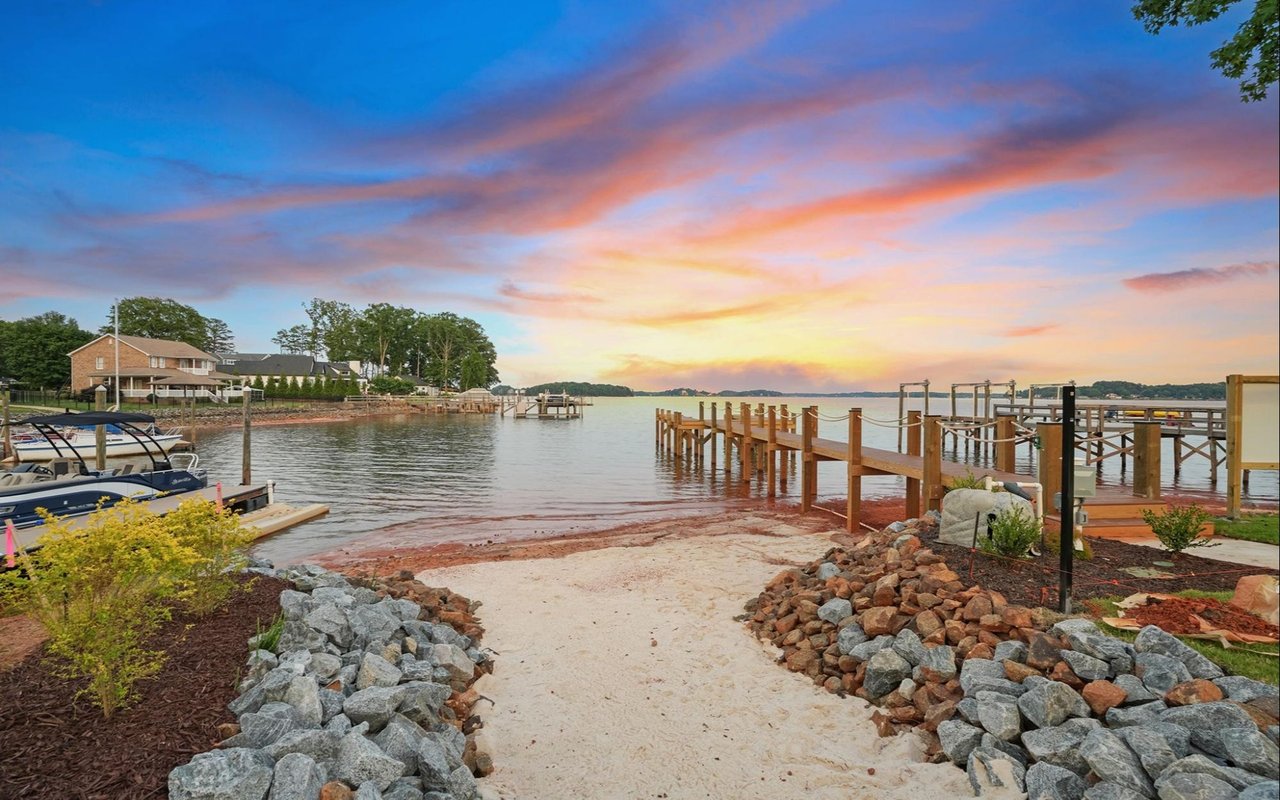
The listing says "private dock with boat lift." The photos show a beautiful covered platform, deep-water access, room for a pontoon and a wake boat. The buyer falls in love with the house in part because of that dock. Then, sometime after the offer is accepted, the question surfaces: is the permit current, is it in the seller's name, and does it actually allow the structure that's sitting there?
That is a late moment to be asking.
On Lake Norman, the dock is not a feature of the home the way a kitchen island or a vaulted ceiling is. It is a separately permitted structure built on land that Duke Energy controls, subject to an approval system that runs parallel to the real estate transaction and does not automatically transfer with the deed. Buyers who understand this before they write an offer are in a fundamentally different position than buyers who learn it during due diligence.
Lake Norman is a hydroelectric reservoir. Duke Energy created it, manages it under a Federal Energy Regulatory Commission (FERC) license, and retains ownership of the shoreline and lakebed. When you buy a waterfront home on Lake Norman, your property line ends at the full pond elevation — the "760 line," which marks the water surface when the lake is 100 percent full at 760 feet above sea level. Every structure at or below that line, including your dock, boat lift, seawall, and any riprap stabilization, exists on Duke's property under Duke's rules.
The practical consequence: no dock on Lake Norman is yours simply because it came with the house. Its legal existence depends on a permit Duke issued, the terms of that permit, and whether those terms have been maintained.
Duke administers this through the Catawba-Wateree Shoreline Management Program. Every parcel of Lake Norman shoreline carries a classification, and that classification is not uniform across the lake. It determines what you are allowed to build, how large a dock footprint can be, whether a covered structure is permitted at all, how many slips are allowed, and how far out into the water you can extend.
Buyers often assume that if a covered boathouse is on the property, covered boathouses must be allowed. That is not a safe assumption. Covered or enclosed boathouses are restricted or prohibited in many shoreline classifications, and a structure that predates tighter rules may have been grandfathered in a way that does not survive a modification request or a permit transfer.
Before making an offer, confirm the parcel's shoreline classification directly with Duke. If you plan to upgrade the dock, add a lift, or cover a platform, verify feasibility under the current classification before that plan becomes part of your purchase logic.
Duke accepts permit applications through the Lake Access Permit System (LAPS), an online portal at duke-energy.com. Applications require a site plan, photographs, proof of ownership or authorization, and applicable fees. Reviews for standard private docks run four to twelve weeks. That timeline matters.
Duke's approval is necessary, but it is rarely the only approval a shoreline structure requires. Depending on the scope of work and the specific parcel, a complete permit picture may involve:
| Agency | Scope | Typical Timeline |
|---|---|---|
| Duke Energy (LAPS) | Dock, pier, lift, seawall, shoreline alteration | 4–12 weeks |
| County building/zoning | Structural permits, electrical for lifts | 2–8 weeks |
| NC Department of Environmental Quality | Wetlands, water quality, riparian buffers | Weeks to several months |
| US Army Corps of Engineers | Dredging, fill, navigable waters | Months or longer |
| HOA (where applicable) | Design, materials, boathouse configuration | Varies |
For a standard dock repair or minor addition, the parallel tracks may be straightforward. For anything involving dredging, shoreline fill, or wetland impacts, the timeline extends materially. NCDEQ and Army Corps reviews can push the process well beyond what a typical closing calendar accommodates. If you are buying with plans to dredge a shallow cove or add a second slip, factor that timeline into the transaction, not into your first summer on the lake.
This is where buyers most often get surprised.
Duke permits are issued to individuals or entities. When the property sells, the permit does not automatically pass to the new owner by virtue of the deed transfer. Some approvals are recorded against title as licenses or easements; others are not. In either case, the new owner typically must register ownership with Duke or, in some situations, submit a new application.
If a permit is in the seller's name and no name transfer has been initiated, documentation may not be released to the buyer at closing. An existing dock without a current, transferable permit is a liability, not an amenity. It may need to be removed, brought into compliance, or re-permitted — and that cost and timeline falls to whoever owns the property when the issue is discovered.
What to verify before closing:
If the seller cannot produce documentation, that is material information. Contract contingencies or escrow holdbacks can address unresolved permit status, but only if the issue is identified while there is still time to negotiate around it.
In Q1 2026, the median price for waterfront homes on Lake Norman was $2,364,000. At that level, buyers are not purchasing fixer opportunities. They are paying for turnkey lake living, and the dock is inseparable from that expectation.
A buyer bringing a large wake boat needs to confirm that the permitted slip dimensions, water depth, and lift capacity actually accommodate that vessel. A buyer planning to enclose an open platform needs to confirm the shoreline classification allows it. A buyer who wants to expand a single-slip dock to two slips needs to verify that the parcel's classification and setbacks make that feasible before the purchase calculus is locked in.
The listing may show exactly what you want. The permit may not authorize it.
Does every Lake Norman dock require a Duke Energy permit? Yes. Because Lake Norman is a Duke Energy reservoir, any permanent structure — dock, pier, boat lift, seawall — requires prior approval from Duke under the Catawba-Wateree Shoreline Management Program. This applies to new construction, modifications, and in many cases maintenance work as well.
What is the "760 line" and why does it matter to buyers? At full pond, Lake Norman sits at 760 feet above sea level. Duke Energy owns the land at and below that elevation. No structure can be built within 50 feet of this line without Duke's authorization. Your property line ends where Duke's begins, which means the dock on the listing exists on Duke's land, not yours.
Can I buy a waterfront home and build a new dock after closing? Yes, subject to Duke's approval, shoreline classification, and any applicable county, state, and federal permits. The review process for a standard private dock runs four to twelve weeks through Duke alone. More complex projects involving dredging or wetland impacts take considerably longer. Plan for this timeline before assuming dock access is immediate.
What if the existing dock has no documentation? An undocumented dock is a risk that belongs in due diligence, not in post-closing problem solving. Duke Lake Services can investigate unauthorized structures. The new owner inherits the compliance obligation. Ask the seller for documentation before closing, and if it does not exist, negotiate accordingly.
Waterfront transactions on Lake Norman are among the most rewarding and the most detail-intensive closings in this market. The dock due diligence outlined here is not a deterrent — it is the difference between a smooth closing and an expensive correction.
Nicole Leininger has guided buyers through Lake Norman waterfront transactions at every price point, including the complexity that comes with docks, shoreline structures, and Duke Energy permitting. If you are evaluating a waterfront property and want a clear-eyed read on what you are actually buying, let's connect.

A Look at What's Defining Lake Norman's Million-Dollar Market.

The Technology Systems Shaping Lake Norman's Luxury Homes.
What's Driving Lake Norman's Second-Home Buyer Market in 2026.
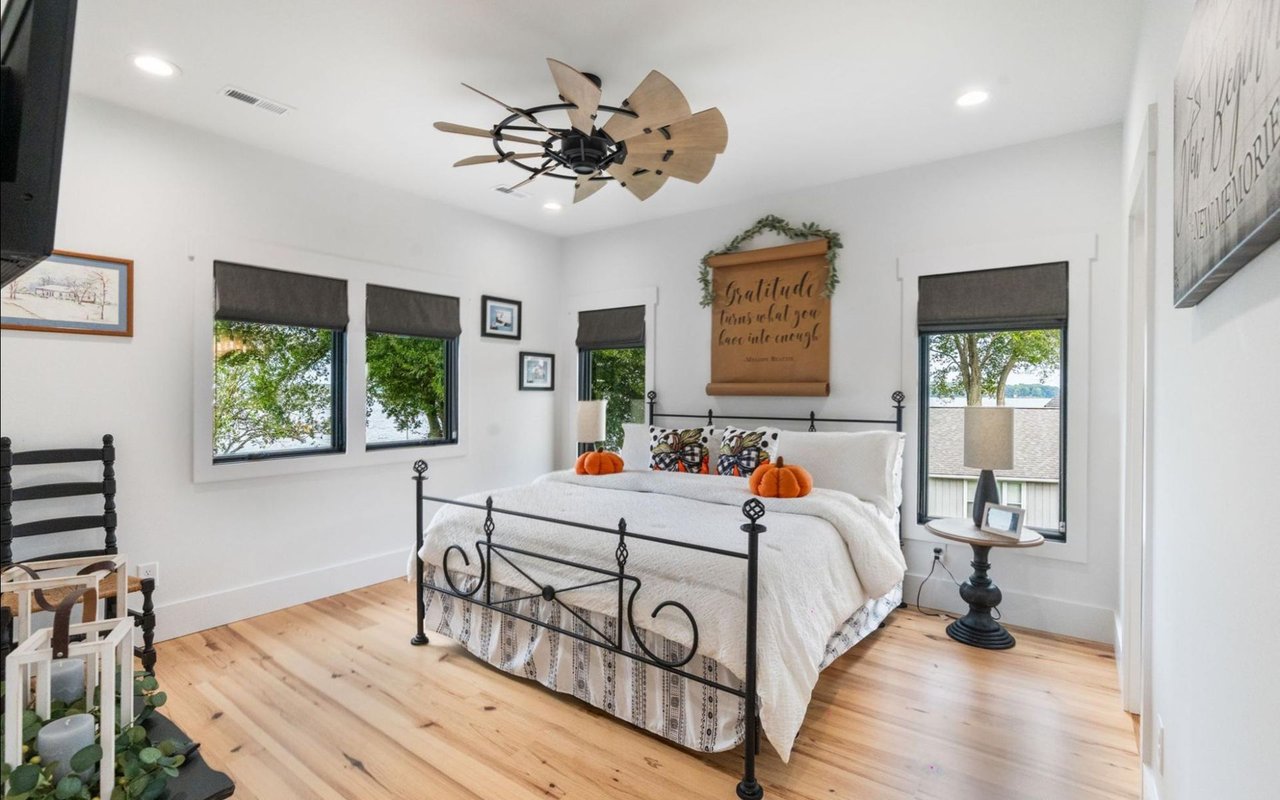
Seasonal Decor Transition Tips for Lake Norman Homes.
Nicole prides herself on being prompt and efficient, keeping her customers informed during every step of the journey, and resolving problems quickly. Her customers often become her friends, and she treats everyone like family. Contact Nicole now!